Recipe library
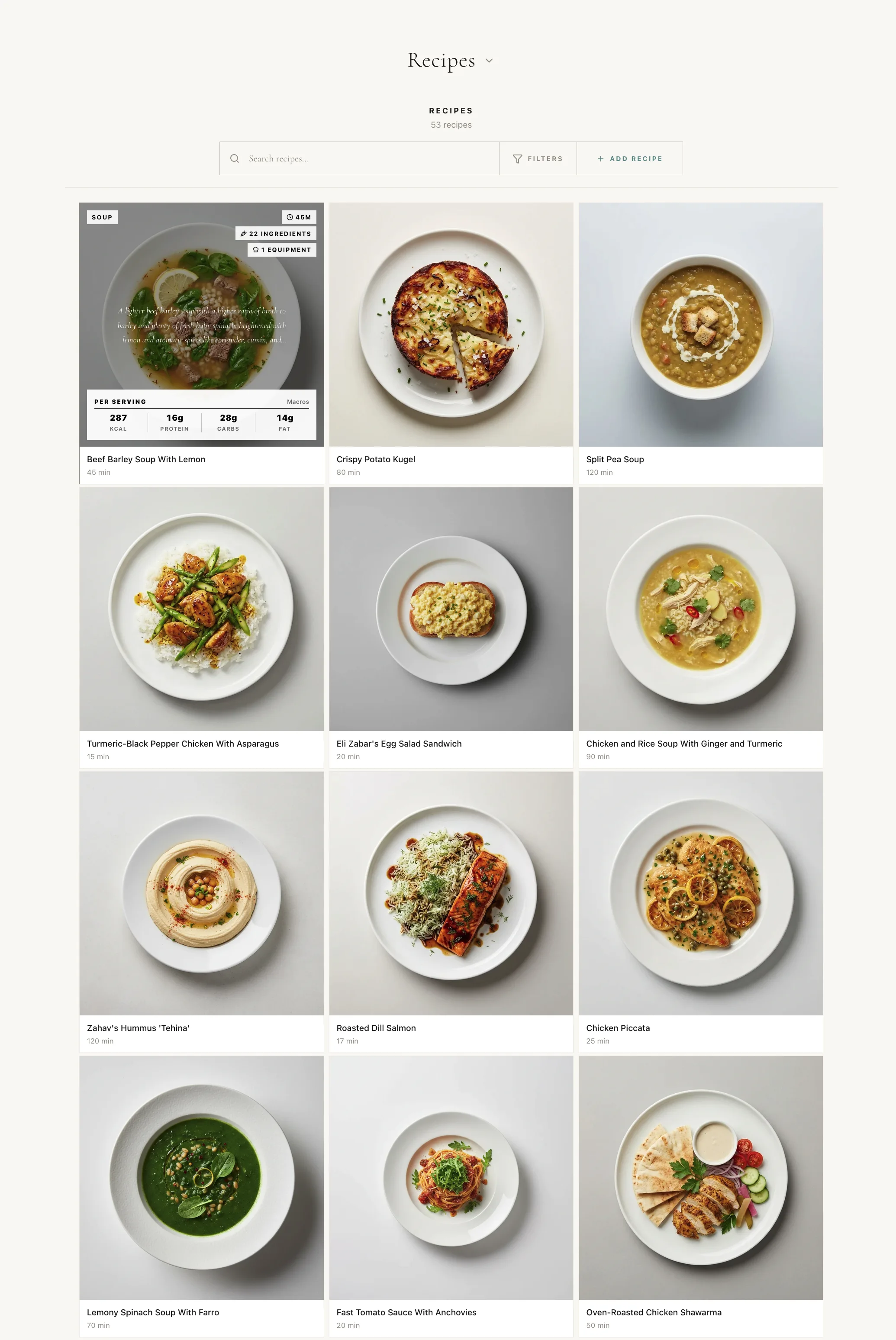
Structured recipes with ingredients, methods, imagery, filters, and detail views designed for reuse in planning and shopping.
Case study
An authenticated recipe platform for coordinating recipes, pantry inventory, USDA-backed ingredient nutrition, meal calendars, shopping lists, and AI-assisted recipe and media workflows.
Recorded scope across routes, data models, interface screens, and workflow code.
An authenticated recipe platform for coordinating recipes, pantry inventory, USDA-backed ingredient nutrition, meal calendars, shopping lists, and AI-assisted recipe and media workflows.
Recipes, pantry inventory, ingredient nutrition, calendar slots, and shopping lists affect one another, yet most tools keep them separate. Tracker connects them as operational records so a planning decision carries through to cooking, stocking, and review.
Recipe and ingredient records are reused across nutrition calculations, pantry inventory, meal calendars, shopping lists, and generation workflows.
Structured recipes with ingredients, methods, imagery, filters, and detail views designed for reuse in planning and shopping.
Ingredient and pantry records connect household inventory, food imagery, source names, aliases, and usage context.
FoodData Central Foundation and SR Legacy records are cleaned, deduplicated, normalized into hundreds of thousands of nutrient rows, and linked to ingredient profiles with source provenance.
Weekly meal slots, recipe selection, and planning state connect the recipe catalog to repeated household routines.
Shopping views derive categorized purchasing work from planned meals, pantry review, and ingredient records.
Natural-language recipe generation turns prompts into structured recipes using nutrient targets, pantry/equipment preferences, dietary constraints, ingredient matching, and queued image jobs.
Implementation details from the product, data, workflow, and infrastructure layers.
Nutrition profiles, nutrients, ingredient links, and unit conversions carry source provenance; the product does not present them as medical guidance.
USDA import and repair scripts processed FoodData Central Foundation and SR Legacy records into normalized profile, nutrient, ingredient, and unit-conversion tables.
The local dataset includes thousands of ingredient/profile links and hundreds of thousands of normalized nutrient rows, giving recipe generation real nutrition context.
Dietary compatibility evaluation produces blocks, warnings, ranking reasons, and unknown-fact states for planning support.
Recipe generation accepts instructions such as nutrient emphasis, cuisine, dietary restrictions, preferred or avoided ingredients, equipment, pantry mode, and time constraints.
Generated recipe ingredients are post-processed against catalog candidates before becoming linked records.
Recipe, ingredient, and equipment image generation moves saved jobs through database rows, Cloudflare queue infrastructure, WebP optimization, R2 storage, and retry/status tracking.
Upload and file-serving routes support authenticated ownership checks, WebP conversion, local storage, and R2-backed deployment.
How the public pages, staff workflows, data, review steps, and infrastructure connect.
Structured ingredients, steps, assets.
Profiles, calculations, provenance.
Calendar slots, templates, recurrence.
Aggregated needs and pantry review.
Catalog, inventory, household context.
Technology
Languages, frameworks, data stores, and infrastructure.
Warm editorial minimalism for household operations: parchment-white surfaces, thin structural rules, compact type, restrained teal accents, and food imagery used as record evidence.
Philosophy
Tracker treats food records as household operations data: searchable, inspectable, and connected to weekly planning.
More screens showing the product in use.