Sequence-modelling pipeline
Python services normalize events, tokenize activity, build profiles, train sequence models, and export inference artifacts.
Case study
A behavioural security analytics prototype that links event normalization, sequence modelling, edge-oriented inference, and analyst review.
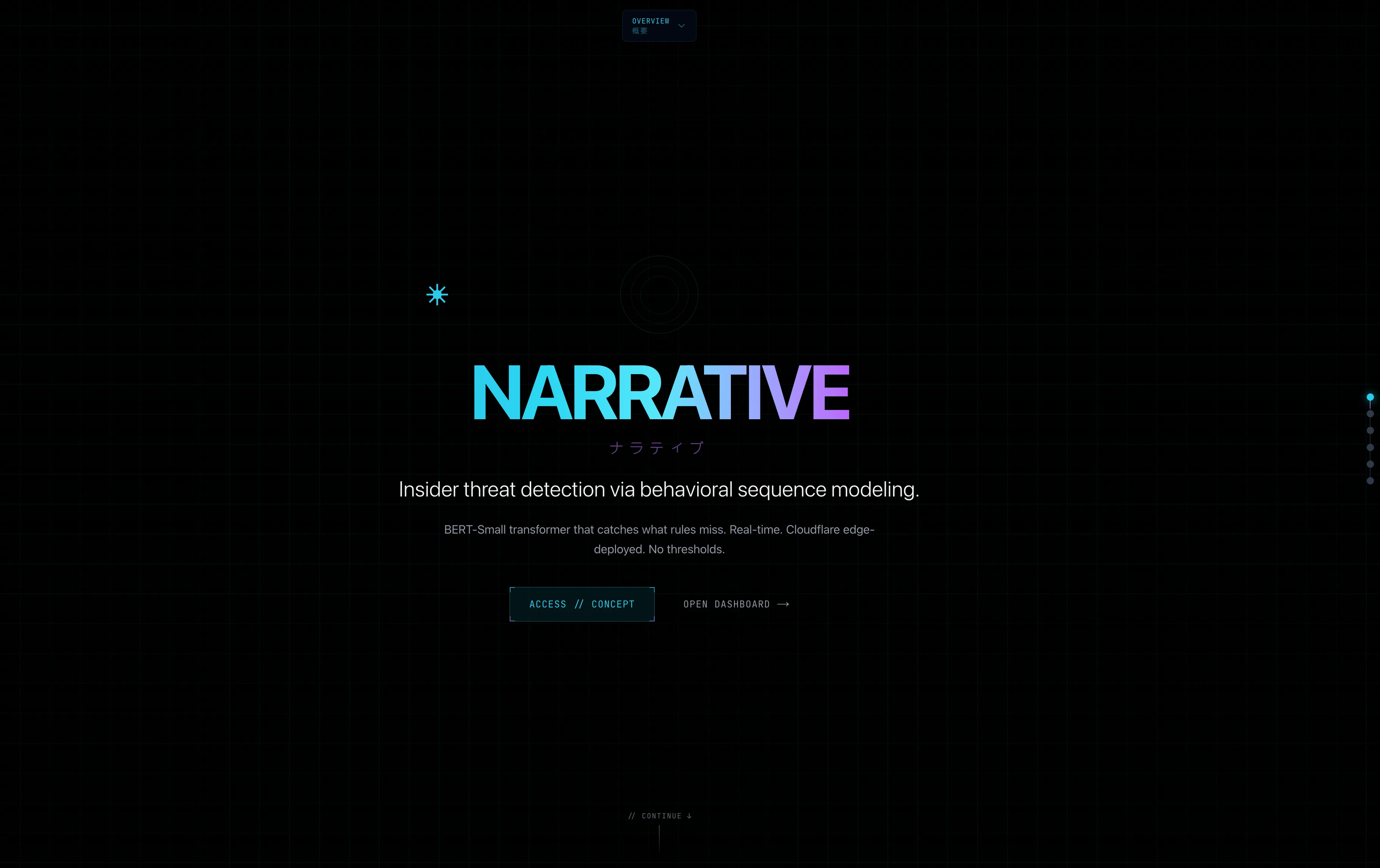
Recorded scope across routes, data models, interface screens, and workflow code.
A behavioural security analytics prototype that links event normalization, sequence modelling, edge-oriented inference, and analyst review.
Isolated security events rarely explain behaviour. The prototype normalizes authentication, process, file, and access activity into behavioural sequences, compares them with user and peer context, and presents the result for analyst review. A model score begins the investigation; it does not settle it.
The prototype converts raw activity into behavioural sequences and anomaly scores, then exposes the evidence and peer context to an analyst.
Python services normalize events, tokenize activity, build profiles, train sequence models, and export inference artifacts.
Analyst screens show queue state, alerts, user risk, timelines, peer context, recommendations, and resolution workflows.
Worker gateway, Python inference containers, queues, KV, R2 artifacts, D1 records, and active-version switching outline a Cloudflare runtime path.
Pydantic/Zod contracts, exercise-data review, audit records, benchmark-style pages, and model exposition pages keep the prototype inspectable.
Pydantic and Zod service boundaries.
Bundles, vocabularies, templates, versions.
Implementation details from the product, data, workflow, and infrastructure layers.
Contract-driven Python services with Pydantic validation.
Runtime validation in TypeScript with Zod and hardened security headers.
Model bundle export, quantization, artifact upload, and active-version switching workflows.
Dashboard screens for triage, analytics, data exploration, users, settings, and operational administration.
System components map across Events, Gateway, Linguist, Profiler, Predictor, Investigator, and Dashboard screens.
Cloudflare deployment paths include Workers, D1, KV, R2, queues, containers, and Access-oriented configuration.
LANL-style and red-team artifacts support benchmark-style review, alert inspection, and model evaluation.
Security headers, audit records, validation contracts, and model exposition pages make the workflow inspectable.
How the public pages, staff workflows, data, review steps, and infrastructure connect.
Structured security telemetry.
Sequence-ready behavioural inputs.
Anomaly scoring and inference artifacts.
Severity, status, recommendations.
Triage, timelines, analytics, settings.
Technology
Languages, frameworks, data stores, and infrastructure.
A security-operations visual language: dark review panels, compact mono labels, sparse severity colour, table-first evidence, queue state, and diagrams that explain the model path.
Philosophy
The product framing keeps the model visible but subordinate to analyst review: event context, peer comparison, queue state, validation, and auditability do the explanatory work.
More screens showing the product in use.